Reflections from Basmat Ahmed on the 13th New Americans Celebration
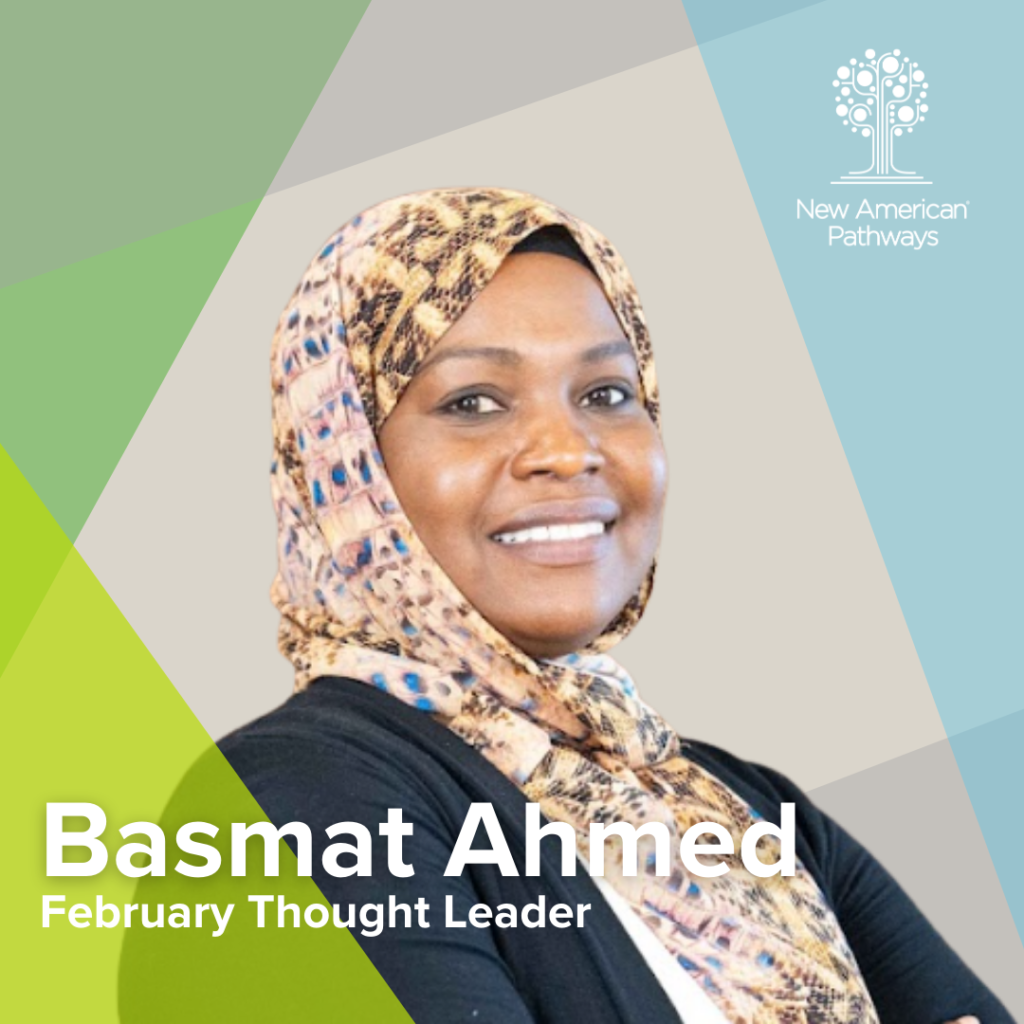
For Basmat Ahmed, this year’s New Americans Celebration was powerful not because it was easy — but because it happened at all.
In today’s tense political climate for immigrants and refugees, simply gathering at the Georgia State Capitol carried meaning. Lawmakers from both the House and Senate stood publicly to recognize the celebration and affirm the contributions of refugees and immigrants to Georgia’s workforce, economy, and communities. That visibility mattered.
There were also challenges. While 350 people registered, about 250 attended. Basmat believes that in a different climate, participation would have exceeded 400. Many refugees and immigrants, even those fully documented, did not feel safe coming to the Capitol.
And still, she calls it a success.
“This is the 13th successful New Americans Celebration,” she says. Success, to her, is measured by resilience and growth.
What began in 2012 with seven resettlement agencies has grown into a 32-organization coalition advocating at the federal, state, and local levels. Many of the leaders involved are themselves refugees or immigrants. They advocate not just with policy expertise, but with lived experience.
Over the years, Basmat has watched confidence grow. People who once came from countries where their voices were never heard in government spaces are now studying the U.S. system, meeting with elected officials, and speaking on legislation that impacts their communities. Civic participation is no longer abstract — it is practiced.
For Basmat, supporting new Americans is not a niche issue. It is central to Georgia’s future.
“New Americans’ stories are part of Georgia’s story,” she explains. Refugees and immigrants are healthcare workers, engineers, teachers, small business owners. They contribute billions in taxes and expand the state’s workforce and consumer spending. When Georgians advocate for new Americans, she believes they are advocating for a healthier, more stable state for themselves.
Her message is simple: do the homework. Understand how state government works. Know your rights and responsibilities. Recognize that your next-door neighbor may be a refugee helping strengthen your community.
Basmat’s own journey reflects that possibility. Resettled 20 years ago by what is now New American Pathways, she arrived as a teenager still learning English. With community support, her family became self-sufficient, pursued education, launched businesses, and gave back. She describes refugees as dreamers who start from scratch, work hard, and earn their place through resilience and compassion.
So what gives her hope now?
She sees more awareness. More people educating themselves about the history of refugees in the United States. She believes the current administration, while creating tension, has also pushed people to study, ask questions, and engage more deeply in civic life .
“At first it looked darker,” she reflects. “Now it’s getting brighter.”
For Basmat, collective action is how communities move through uncertainty. Sometimes it takes a storm to wake people up. And sometimes, that awakening becomes the beginning of lasting change.