Advocacy Begins with Gratitude
My family and I arrived in the United States as stateless Bhutanese refugees in 2016.
We resettled in Georgia, where I was amazed by the strength and generosity of the refugee and immigrant communities. People were always willing to support one another, and Georgia quickly became home. Like so many refugees who have rebuilt their lives here, my family remains deeply grateful to the state that welcomed us, and we believe in giving back.
But 2026 is not 2016.
Today’s political climate has created new challenges for refugee and immigrant communities. Policies and rhetoric affecting immigrants, refugees, and other marginalized groups have created fear and uncertainty for many families who once felt welcomed and protected.
We have seen how harmful rhetoric can impact entire communities. During the COVID-19 pandemic, terms like “the Chinese virus” fueled discrimination against Asian Americans. More recently, changes to programs intended to promote belonging, representation, and equal opportunity have left many communities feeling less supported and more uncertain about the future.
The strength of the United States has always been its diversity. Refugees and immigrants have helped build the communities we all call home.
For me, advocacy began long before I arrived in America. As a teenager in India, I worked alongside my late father, who led the movement for democracy and human rights in Bhutan. Despite having limited resources, we organized meetings and press conferences to raise awareness about the struggles of Bhutanese refugees. Writing became one of my most powerful tools to share our community’s story and advocate for justice.
Seeing today’s challenges facing refugee and immigrant communities, I knew I could not remain a spectator. My conscience compelled me to do what I could to support those who are most vulnerable.
That is what led me to join the New American Civic Pathways Leadership Program. Through interactive workshops, networking opportunities, and community advocacy projects, the program strengthened my skills in civic engagement, advocacy, and public leadership.
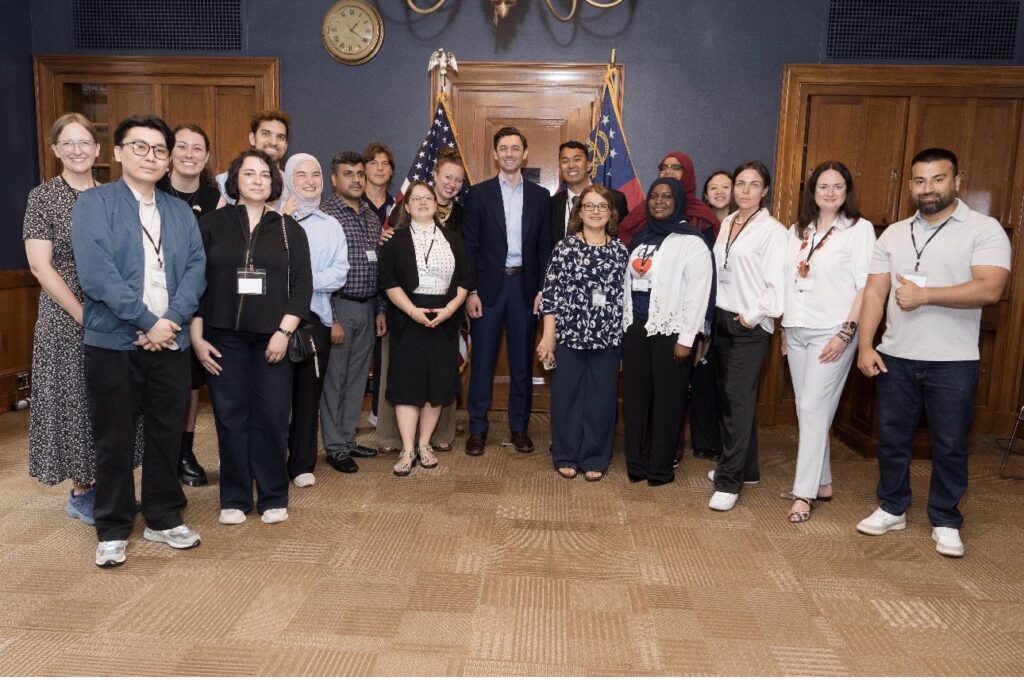
As chair of our team’s Federal Advocacy Project, I helped organize meetings with Senator Raphael Warnock’s office and participated in advocacy visits at the Georgia State Capitol. I also conducted workshops on “Know Your Rights” and “Government and Politics,” and delivered a presentation on the socioeconomic contributions of refugee and immigrant communities during New American Celebration at the Georgia State Capitol.
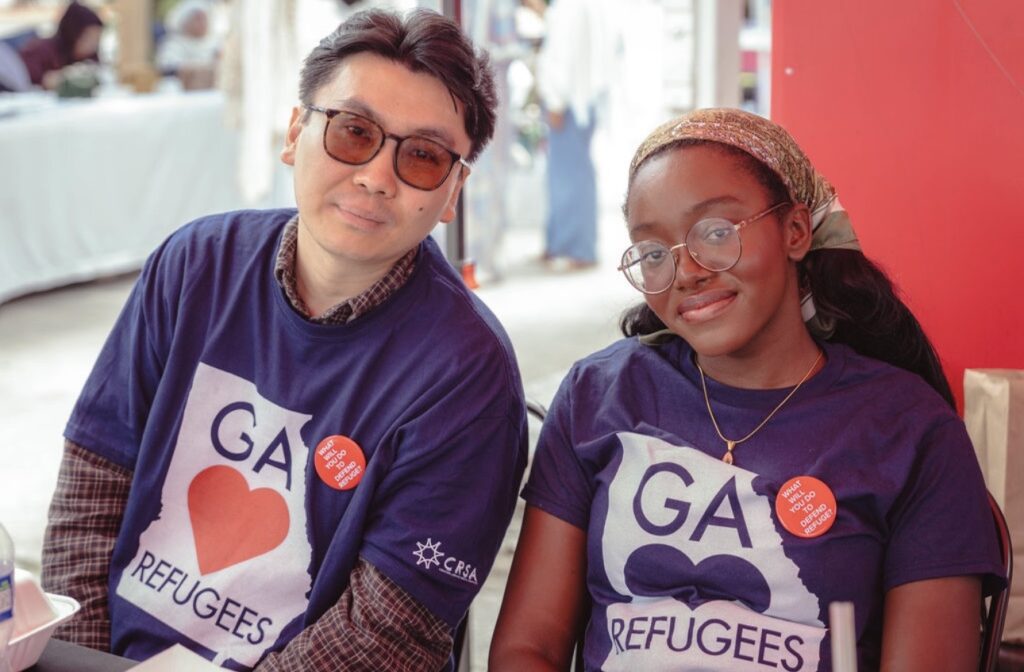
One of the most meaningful experiences came during the 2026 RCUSA Advocacy Days in Washington, D.C. I believe it is important to build relationships with our elected officials—including those who may disagree with us—because lasting support for refugee and immigrant communities requires ongoing conversation and collaboration.
During Advocacy Days, we met with members of Georgia’s congressional delegation to discuss how recent policy changes are affecting refugee and immigrant families across our state. We shared the importance of maintaining safe humanitarian pathways, protecting work authorization, preserving access to essential services, and ensuring families can continue rebuilding their lives with stability and dignity.
Whether meeting with Representative Buddy Carter, Senator Raphael Warnock’s staff, or Senator Jon Ossoff, our goal was the same: to share the experiences of our communities and advocate for policies that allow refugees and immigrants to thrive.
Those three days in Washington reminded me that advocacy is most effective when people from different backgrounds come together around a shared belief: that every person deserves safety, dignity, and opportunity.
I intend to continue advocating for refugee and immigrant communities in every way I can. I also encourage others to use their voices to support those who are most vulnerable—families separated by conflict, refugees waiting to be reunited with loved ones, and people fleeing persecution in search of safety and a better future.